

Fiber Optic ULTRAsleeve
FIS Introduces a No-Heat Method to Protect Fusion Splices - No Special Tools Needed
The ULTRAsleeve® is a no-heat protection cover for fused fibers that is applied after the fusion process.
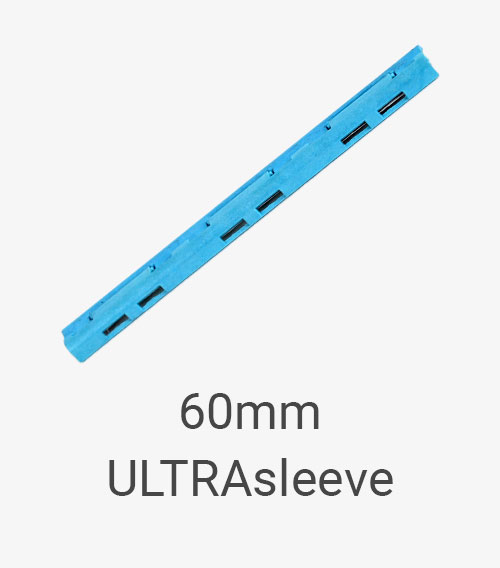
This fusion splice protection sleeve is durable, competitively priced and easy to install on fusion spliced optical fibers without requiring heat, curing, crimping or gluing. No need to wait for heat ovens that often hold up splicing, or breaking a splice because the splice protection sleeve was not pre-threaded prior to splicing. The ULTRAsleeve® comprises two halves that fold along a hinge and is delivered in the open position, ready for fused fibers to be placed into the sleeve. Once the fibers are in the protection cover, the sleeve closes and locks. The lock keeps the ULTRAsleeve® from opening and compresses the Acrylic Foam to provide a hermetic seal. Conserve battery life on fusion splicers and use the ULTRAsleeve® to extend splicing capability. Great for FTTX applications.
• Protect against moisture with ULTRAsleeve® all dielectric construction.
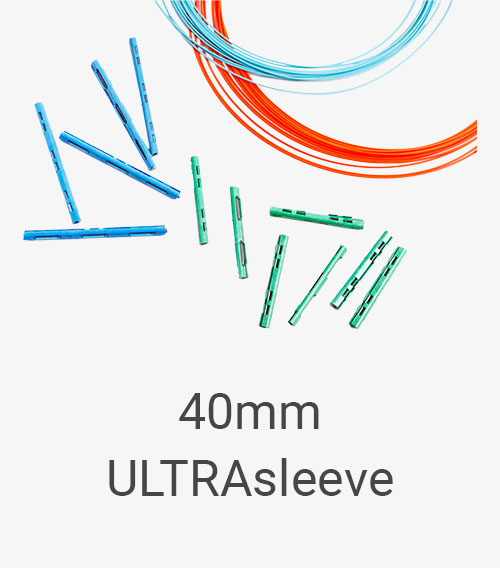
• Available in 60mm or 40mm length single-fiber protection sleeves.
• Traditional sleeves may shrink unevenly or may not shrink completely on the first try. Reheating the sleeve may cause micro-bending.
• No expensive fixtures or need for additional heat ovens required to increase productivity.
• Extends the battery life of fusion splicers. No need to wait for the heat oven to cycle.
• No worry about pre-threading the fibers, as ULTRAsleeve® is applied after fusion process.
UTRAsleeve Menu
STEP 1
Prepare the ULTRAsleeve® by removing and discarding the white protective strip.
STEP 2
Place the fused fiber into the center of the sleeve (in the fold).
STEP 3
Gently close the two halves of the sleeve until a "snap" is heard. The sound represents the locking tabs latching into the closed position.
STEP 4
Place the sleeve into the fusion splice tray holder. No special tools required to install the ULTRAsleeve®. The ULTRAsleeve® is a no heat protection cover for fused fibers that is applied after the fusion process.