Contractor’s choice
For Telecommunication Fiber Optic Products
Assemblies
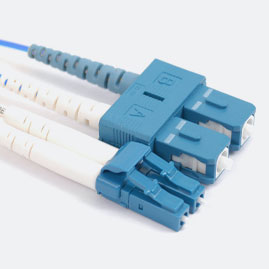
Fiber optic patch cords are also known as jumpers. They are generally just a few feet long and are capped at either end with a connector. This connector allows the patch cord to be easily connected to a piece of telecommunication equipment.
Test Equipment
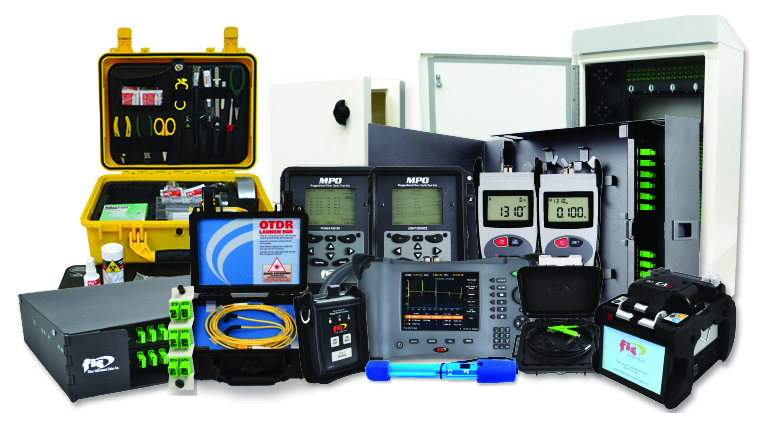
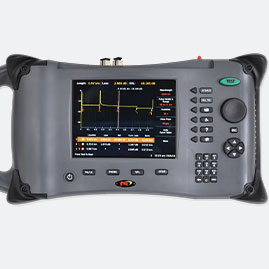
Fiber Optic Test Equipment is used to certify and troubleshoot fiber optic networks. From OTDR's to Visual Fault Locators, these essential testing tools help you to be the expert in charge of your fiber optic network. Power Meters and Light Sources test for optical power. Optical Fiber Identifiers help you to know if the fiber you are handling has active traffic before you take it down for maintenance. Inspection Probes now come with software available that will tell you if a connector endface passes published industry standards, taking out the guess work for the technician.
Splicing
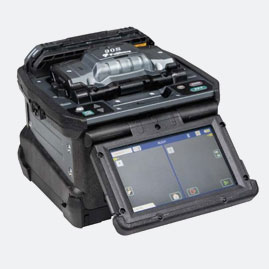
Fusion Splicing is a preferred way to join two fibers together by using heat. Whether the fiber was broken or not long enough, a fusion splicer will make your job easier. Splicing fiber optic cable is fairly simple procedure. Prepared fiber ends are placed in the splicer and automatically aligned and then fused together. This method ensures greater reliability with less light being scattered or reflected back by the splice. The splice itself if done correctly should be as strong as the original optical fiber.
Enclosures
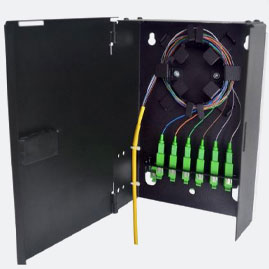
Fiber Optic Enclosures provide a secure location to install fiber optic equipment, cabling and related hardware. Enclosures are available in a wide variety of designs to connect and organize telecommunication equipment. Fiber Instrument Sales maintains a huge inventory and competitive pricing on many of these enclosures and their related components; including telecom relay racks, patch panels, rack and wall mounted interconnect enclosures, fiber optic pigtails, adapter plates and cable management hardware.
OSP Closures
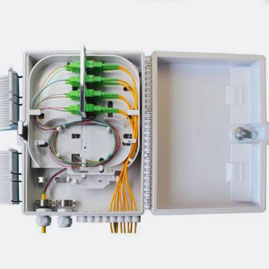
Outside Plant Closures are designed to protect optical fibers from debris, dirt, dust, moisture and water. All of these are detrimental to the performance of your network. Debris, dirt and dust can cause scratching of the connector ends or if they are large enough they may cause the light to be totally blocked so that it cannot continue to travel to the receiving equipment. It is also important to protect fibers from moisture and water. If the fiber is continuously exposed to moisture, over time, this exposure will cause small imperfections to grow which will cause the fibers to not perform as well and to possibly fail. It is also important to protect from water because when the water freezes it can cause attenuation or even break the fiber.
Cable
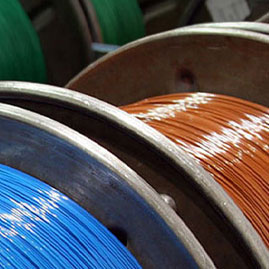
Fiber Optic Cable is available in many different constructions to satisfy the needs of a wide range of types of applications. A fiber optic cable is composed of at least one fiber and can be up to 6,912 strands of optical fiber. Each of the optical fibers is smaller in diameter than a human hair. For high density applications, Micro Distribution Cable is ideal because it can provide a high fiber count in a small footprint. Simplex and Duplex cables are perfect for fiber optic patch cables. Loose tube optical cable is the way to go for outdoor installations especially in direct burial applications. No matter what type of bulk fiber optic cable your installation needs, we can help.
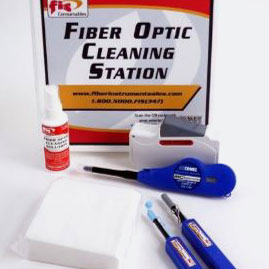
Consumables
Almost nothing is worse for your network than a dirty connector. Proper cleaning practices help to prevent downtime and reduce back reflections in your network. There are many cleaning methods and even more cleaning options available today for technicians to keep the connections in your network pristine. Dry cleaning, wet cleaning or wet to dry cleaning, you will find the solvents, solutions, wipes and swabs, as well as cleaning tools you need to keep your network running at its best.
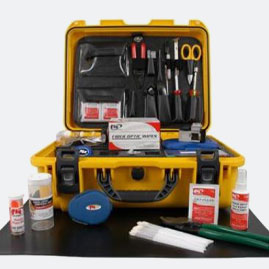
Tools and Tool Kits
Having the right tools for the job is very important. The right tool can make the difference between the job getting done in 5 minutes, or for the job to take 5 hours. Fiber optic stripping tools, buffer tube removal tools, armor splitting tools, mid span access tools, and drop cable slitting tools are just some of the things you will find here to help you get the job done and done well. Tool kits are a convenient way to keep all your tools in one place. Tool kits can be customized to your specific needs or choose one of the many specialized tool kits available, such as the Fusion Splicing Tool Kit or the Data Center Cleaning Station Kit.
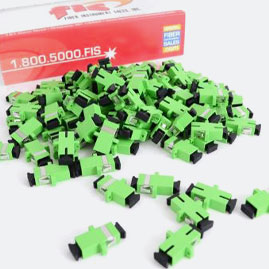
Connectivity
The items in this category vary greatly in form and function but they all are used to connect your network equipment to your fiber backbone. Connectors are used to terminate the ends of the fiber optic cable so that it can be connected to your network equipment. They are available as traditional epoxy style connectors or quick termination mechanical type connectors. Fiber optic adapters are used to mate two connectors together in a patch panel or for testing purposes. Terminator or Black Hole Connectors are used to decrease back reflections from unused ports in your patch panel. Attenuators are also available to decrease signal strength when the transmitting laser is too hot. Termination tools, connector boots and dust caps are also available.
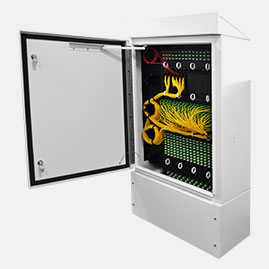
The FTTx Solution
Today, telecommunication companies, CATVs and hundreds of Tier 2 and Tier 3 companies are planning or building FTTx networks. The demand is there, but it must be harvested with a solid line of FTTx product solutions and support. FIS is serving this growing market through its Zeus FTTx Solutions program.
Over the last 20 years, network providers have faced the need to upgrade their networks to meet customer demand for more bandwidth. Network providers that have been successful at this have replaced the copper wire sections of their networks with high-capacity optical fiber that extends from the Central Office all the way to homes, businesses, and other end users.
This type of end-to-end optical network is commonly referred to as Fiber To The x (FTTx). In this brochure, the "x" variable refers to a Home, Multiple Dwelling Unit (MDU), Business Enterprise, or other end user of broadband services.
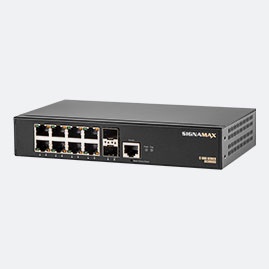
Networking
FIS offers a full line of copper assemblies and quality network active equipment. CAT 6 and CAT5e patch cables, fixed and SFP port multi-port media converters and switch gear. SFPs available to match your specific network requirements.
Authorized Dealer: