Server Cabinet vs. Network Cabinet: Key Differences ExplainedThe question server cabinet vs network cabinet comes up in nearly every enclosure buying decision, and the confusion is understandable — the two look almost identical from the outside. Both are enclosed, lockable, 19-inch rack-compatible housings. But the equipment they’re built to
Read more...
Wall Mount vs. Floor Standing Fiber Cabinets: Which One Do You Need?Before comparing specific cabinet models, the first real decision in any fiber enclosure project is form factor: wall mount cabinet or floor-standing network cabinet/server cabinet. Getting this call right the first time avoids two expensive mistakes — a wall mount enclosure that
Read more...
What Is a Rack Mount Fiber Enclosure? A Complete
Buyer’s GuideIf you manage fiber connectivity in a data center, central office, or telecom room, you already know that backbone multi-fiber trunk cable is a liability. A rack mount fiber enclosure solves that problem by giving technicians a single, organized, 19 inch or 23 inch rack-compatible
Read more...
Free-Standing Relay Racks Explained: A
Practical Guide for Telecom and Data Center TechsIf you’ve spent any time around a central office, telecom closet, or data center, you’ve seen a free-standing Network or Server racks. It’s the open, two- or four-post metal frame that network equipment, patch panels, and fiber enclosures bolt into.
Read more...
How to Choose the Right Rack Mount Fiber Patch PanelA rack mount fiber patch panel is the single most-touched piece of hardware in most fiber networks. It’s where technicians make, break, and re-route connections during turn-ups, troubleshooting, and moves/adds/changes — so getting the right one matters more than almost any other cabling
Read more...
Fiber optic drop cable is intended to complete the last-mile segment of a fiber network. Given the variety of environments and conditions fiber optic cable may encounter, choosing the appropriate type is vital for ensuring optimal performance and reliability in broadband networks. In this article, we will compare the different types of drop cables
Read more...
Fiber optic drop cables serve as crucial components in broadband networks, connecting homes to service providers. These cables typically feature an oval shape, with dimensions of 4.3mm by 8.0mm, containing one inner buffer tube that houses 1-12 fibers and two strength members. The polyethylene outer jacket provides resistance to UV rays and ensures
Read more...
What is Fiber Optic Drop Cable?Fiber Optic Drop Cable is a critical component of any broadband network. It is the connection from the side of the house or multi-dwelling structure to the fiber enclosure where the drop cable is connected. Fiber Optic Drop Cable can be installed aerially on pole or a cable strand, below grade in a handhole or above
Read more...
FIS offers compliant products under the Build America Buy America Act.
The Build America Buy America Act is now a hot topic in the telecommunications industry. It was signed into law on November 15, 2021, as part of the Infrastructure Investment and Jobs Act. This act requires that all telecommunications equipment and services used in
Read more...
In the past 10 years or so the fiber to the “x” industry, has experienced an extensive boom; generally out-growing the fiber optic industry as a whole. This growth was further spurred on by the Corona Virus pandemic of 2020-22 where many gaps and weaknesses in home & neighborhood networks were exposed due to the
Read more...


 Fiber optic drop cable is intended to complete the last-mile segment of a fiber network. Given the variety of environments and conditions fiber optic cable may encounter, choosing the appropriate type is vital for ensuring optimal performance and reliability in broadband networks. In this article, we will compare the different types of drop cables
Read more...
 Fiber optic drop cables serve as crucial components in broadband networks, connecting homes to service providers. These cables typically feature an oval shape, with dimensions of 4.3mm by 8.0mm, containing one inner buffer tube that houses 1-12 fibers and two strength members. The polyethylene outer jacket provides resistance to UV rays and ensures
Read more...
 What is Fiber Optic Drop Cable?Fiber Optic Drop Cable is a critical component of any broadband network. It is the connection from the side of the house or multi-dwelling structure to the fiber enclosure where the drop cable is connected. Fiber Optic Drop Cable can be installed aerially on pole or a cable strand, below grade in a handhole or above
Read more...
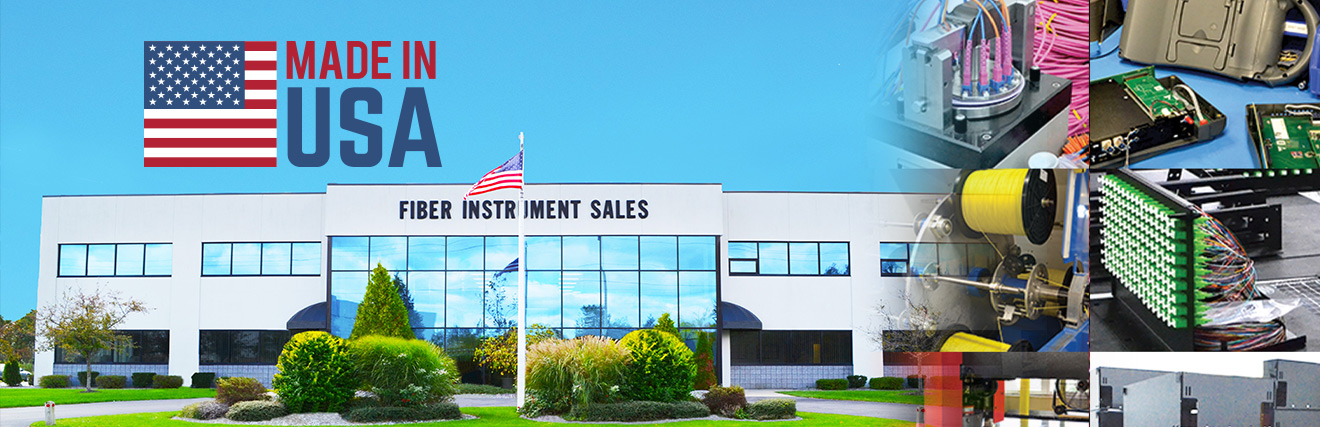 FIS offers compliant products under the Build America Buy America Act.
The Build America Buy America Act is now a hot topic in the telecommunications industry. It was signed into law on November 15, 2021, as part of the Infrastructure Investment and Jobs Act. This act requires that all telecommunications equipment and services used in
Read more...
 In the past 10 years or so the fiber to the “x” industry, has experienced an extensive boom; generally out-growing the fiber optic industry as a whole. This growth was further spurred on by the Corona Virus pandemic of 2020-22 where many gaps and weaknesses in home & neighborhood networks were exposed due to the
Read more...